Sub-Total: $0.00
Deadheading Magic: The One Summer Ritual Your Rhodos Will Love
Why I Always Deadhead My Rhododendrons (and Why Your Plants Will Thank You Too!)
One of my favourite summer jobs in the nursery is deadheading rhododendrons. It’s simple, a bit therapeutic, and honestly quite lovely to do in the late afternoon with the dogs wandering around and a glass of wine in hand. Deadheading is one of those small garden tasks that makes a big difference to the health and shape of your rhododendrons, and it’s something I’m always asked about—so here’s my personal take on when, why, and how to do it properly.
Once the flowers fade, rhododendrons naturally try to put their energy into producing seed, which isn’t much use to us if we want fuller, stronger plants. By removing those old flower trusses, the plant redirects its energy straight back into growth and next season’s flower buds. You’ll get bushier growth, better structure, and a much more impressive display the following spring. If you choose not to deadhead, most plants will only send up one or maybe two new leaf buds from each flower truss. But when you do deadhead, you can often encourage three, four, or even five new shoots—an instant recipe for a fuller, more compact rhododendron.
Deadheading also helps reduce the chance of fungal problems because old flowers can harbour spores and moisture. Keeping the plant clean and open really does make a difference, especially in humid or wet summers. And if you’ve ever wondered whether it’s too late to deadhead—honestly, it’s never too late. You just need to be gentle, as by late summer the little pre-emerging leaf buds are already forming, and you don’t want to damage those.
I always prefer to dehead sooner rather than later, though, because everything is firmer and easier to snap cleanly. On bigger rhododendrons, I simply deadhead as far as my arms can reach. And don’t worry about dropping old flower trusses on the ground. They vanish quickly in hot weather, though sometimes I’ll use a bucket if I’m working on a tidier garden bed. Either way is absolutely fine.
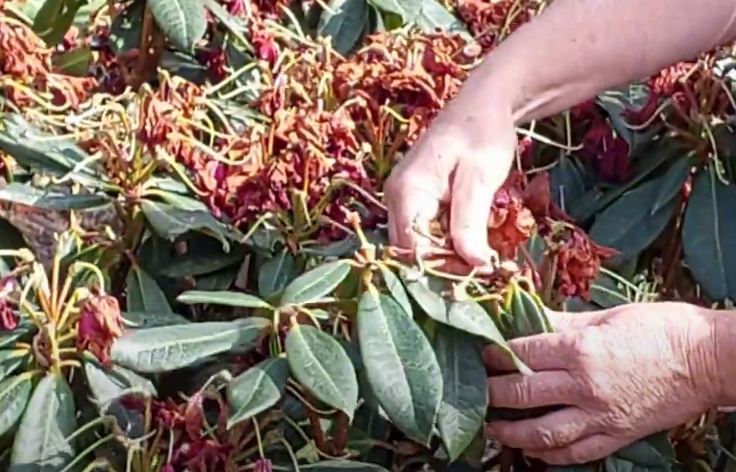
The actual technique is easy. Most large-flowered rhododendrons “snap” nicely if you place your thumb and forefinger at the base of the spent truss and gently push or twist it off. A little tip I swear by: rubbing a tiny bit of vegetable oil on your fingertips stops the sticky resin from clinging to your hands—it makes the job so much more pleasant. If the truss doesn’t snap easily or the wood is older, I’ll use clean, sharp pruners to cut just above the new growth collar. The key is to remove the whole stalk; if you leave too much stem behind, the energy can still be drawn into that piece rather than into new buds.
Some of the small-flowered rhododendron varieties don’t set much seed at all, so deadheading is optional with them, but with larger hybrids and garden favourites, it really does pay off. The results show up quickly—fresh shoots, bushier growth, stronger foliage, and an all-round healthier plant. And of course, a better bloom display next season.
So yes, deadheading really is one of those wonderfully rewarding rhododendron care tasks. It’s peaceful, it’s productive, and it sets your plants up beautifully for the year ahead. If you’d like to see exactly how I do it, I’ve popped a short YouTube video together—watch along and learn how to deadhead your rhododendrons with confidence.